
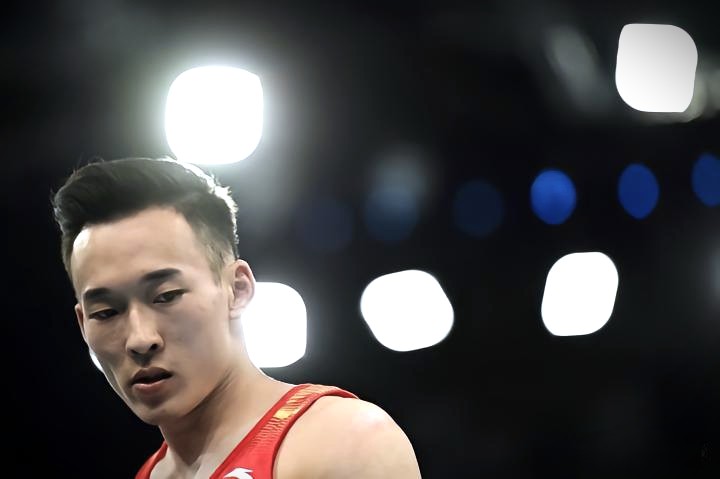
Xiao Ruoteng: Resilience, Tragedy, and Greatness
In the high-stakes world of elite gymnastics, where careers are often measured in seconds and decided by the thousandths of a point, Chinese gymnast Xiao Ruoteng stands as a monumental figure. Known to fans as the “Uncrowned King” and to his teammates as “老肖” (Old Xiao), the Beijing-born gymnast became the emotional and technical anchor of the Chinese men’s program.
From Hyperactive Child to Rio Heartbreak
Born on January 30, 1996, Xiao Ruoteng was not initially destined for the stoic discipline of gymnastics. His parents enrolled him in the prestigious Beijing Shichahai Sports School at age five primarily to “tame” his overabundant energy. What began as a way to burn off steam quickly revealed a generational talent.
He bloomed as a junior gymnast and was turning heads countrywide by age 15 and entered the national team. Coaches noticed that he didn’t train with his body like most athletes did: he trained with his mind, opting to avoid unnecessary pain and suffering by training smarter, not harder. It wasn’t that he couldn’t take the pain, he just didn’t need to suffer through it when not needed. He met his idols Li Xiaopeng and Yang Wei through training camps as a small child and they further inspired him to pursue the top level of gymnastics.

However, Xiao’s path was never easy. His first major professional trauma occurred in 2016. On a clear trajectory for the Rio Olympics, Xiao suffered a devastating elbow injury just weeks before the Games. Forced to watch from home as the Chinese men’s team failed to win a single gold medal (a national crisis in Chinese sports), Xiao entered a period of “monastic training.” He didn’t just recover; he rebuilt his entire technical foundation and came back stronger.
2017: The Man Who Ended the Kōhei Uchimura Era
The 2017 World Championships in Montreal marked a tectonic shift in the sport. The legendary Kōhei Uchimura, who had remained undefeated in the All-Around competitions for eight years, withdrew due to injury. Xiao Ruoteng stepped into the vacuum, becoming the first Chinese gymnast since Yang Wei in 2007 to claim the World All-Around title.
He won not through raw power, but through what fans called “Chinese Elegance”: long, clean lines and clinical execution. He restored national pride, but he remained humble. “I didn’t beat Uchimura,” he told the press. “I just took the torch while he was resting.”
The Cursed Tie Breaker
Despite his 2017 triumph, Xiao’s career would soon become defined by the cruelest margins in sporting history.
At the 2018 World Championships in Doha, Xiao Ruoteng and Russia’s Artur Dalaloyan finished the All-Around final with identical scores of 87.598. In a move that still haunts Chinese gymnastics fans, the FIG tie-breaking rule was applied:

In this scenario, the tie-breaking process involved the exclusion of the lowest-scoring apparatus from the cumulative score: Xiao Ruoteng’s Floor score (14.133) and Artur Dalaloyan’s Pommel Horse score (13.400) were removed. The gymnast with the higher total score on the remaining five apparatuses was ranked higher (74.198 compared to 73.465).

Xiao was relegated to Silver. His response was a hallmark of his character: “A silver medal is also a weight. I don’t want to win by a rule; I want to win by being undeniable.”
The Gold That Slipped in Tokyo
This pattern reached a fever pitch at the Tokyo 2020 Olympics. After a near-flawless performance, Xiao lost the gold to Japan’s Hashimoto Daiki by a mere 0.4 points. This All-Around final was marked by 2 controversies:
1/ Hashimoto Daiki’s vault:
Daiki scored a 14.700 on his vault despite an unsteady landing in which he stepped outside the boundary lines, prompting some commentators to suggest that he was awarded an inflated score. They compared his performance to those of other finalists to emphasize the disparities in scoring His score sparked intense debate, particularly among Chinese fans and media, fueling allegations on social media of judging bias in favor of the host nation. Subsequently, the FIG issued a press release affirming that Daiki’s vault was assessed and scored in accordance with the Code of Points.
The Japanese gymnast received thousands of not very friendly messages on social media and was a victim of severe online abuse by Chinese internet users following his gold medal victory at the Tokyo Olympics. The cyberbullying campaign escalated rapidly on social media platforms due to nationalist frustrations over the judging of his vault.
2/ Xiao Ruoteng’s salute
The All-Around was characterized by a match between Hashimoto Daiki and Xiao Ruoteng. Entering the final event, Hashimoto was positioned in third place, with Xiao in the lead, but with an impressive 14.933 on high bar, the Japanese gymnast secured the top position on the podium.
Xiao’s score on the last event (14.066) was deemed so low, that it prompted his coach to submit an inquiry: it was dismissed and the score remained unchanged. The judges said that Xiao had failed to salute them prior to his routine, in accordance with the Code of Points, leading to a deduction of 0.3 points from his final score.
While Chinese social media expressed significant outrage, Xiao maintained a diplomatic stance, appealing to his fans with the message, “The athlete is innocent. Let us concentrate on the elegance of gymnastics.”
A silver medal is also a weight. I don’t want to win by a rule;
I want to win by being undeniable.
The “Metal Man”: Pain and the Paris Cycle
To understand Xiao Ruoteng, one must understand his medical chart. By the time the Paris 2024 cycle began, Xiao was competing on what coaches described as “an ankle that shouldn’t work.” Chronic Achilles tendinitis and a shredded shoulder required multiple surgeries in 2022.

Photo by Lintao Zhang/Getty Images
He became known as the “Metal Man” in the training hall, his joints perpetually encased in heavy kinetic tape. Before the Tokyo AA final, it was later revealed he had taken multiple pain-killing injections just to stick his landings.
His personal coach, Wang Hongwei, once remarked on his “stubbornness,” noting that Xiao would refuse to leave the gym until he completed a routine perfectly three times, even when the medical staff warned his ligaments were at a breaking point.
Paris 2024: The Emotional Anchor
At age 28, an “ancient” age for a male gymnast, Xiao entered the Paris 2024 Olympics as the veteran leader. The Team Final became one of the most painful moments in Chinese sports history. China held a massive lead until the final rotation, where teammate Su Weide fell twice from the High Bar, handing the gold to Japan.
While the world’s cameras caught Su Weide in tears, they also caught Xiao Ruoteng. Instead of showing his own devastation, Xiao was the first to reach Su, placing a hand on his neck and whispering words of support despite his own tears of despair. He led the shattered team to the podium with his head held high.
Days later, he fought through his own physical exhaustion to secure an individual Bronze in the All-Around, behind teammate Zhang Boheng (silver) a testament to his enduring world-class status.
My body is a collection of stories. Every scar is a competition I didn’t give up on.
The Man Behind the Medals
Xiao is a rare breed of athlete who bridges the gap between a rigid state system and modern individuality:
– The “Quiet” Rebel: He sports a tattoo on his arm, a rarity for state-sponsored Chinese athletes, which he often covers with tape to avoid friction with conservative officials.
– Pop Culture Fan: He is an avid fan of the NBA (specifically Stephen Curry and the Warriors) and often watches anime to find “underdog inspiration.”
– The Beijing Accent: Unlike many athletes who adopt a neutral “broadcast” Mandarin, Xiao speaks with a thick, charismatic Beijing accent (the “Er” sound), making him a relatable figure to the “regular” citizens of the capital.
– Style: Off the mat, he is a known fashionista with a penchant for high-end streetwear and luxury watches.
Legacy: The Spine of the Team
Ye Zhennan, the former head of Chinese gymnastics, perhaps summed him up best: “Xiao Ruoteng is the soul of this team. It isn’t just about the points he scores; it’s about the fact that when he is on the floor, the younger boys feel they cannot fail.”
Xiao Ruoteng may not have the Olympic All-Around Gold his talent deserved, but his legacy is something rarer. He is the gymnast who survived the Uchimura, Nagornyy, and Hashimoto eras, maintaining a standard of elegance that never wavered. As he famously said after Paris: “My body is a collection of stories. Every scar is a competition I didn’t give up on.”
Xiao Ruoteng’s Medal Count

More:
Training Elite Gymnasts in China




Leave a Reply