
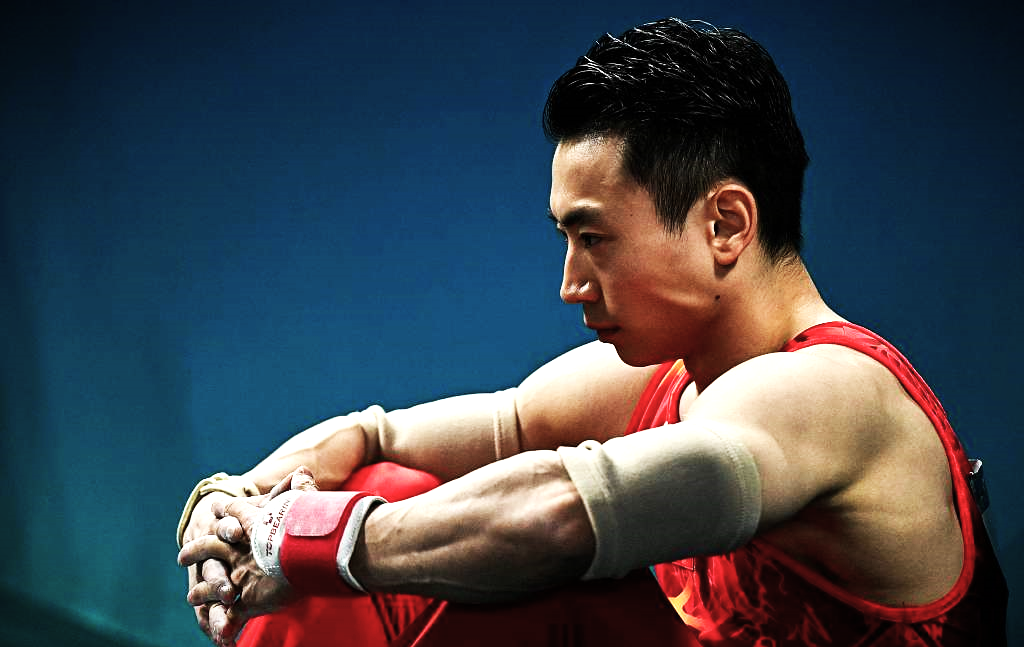
Zou Jingyuan: Unparalleled on Parallel Bars
Zou Jingyuan has been dominating the Parallel Bars finals at all major competitions since 2017. His name has since become synonymous with excellence on the apparatus. With a string of World Championships and Olympic gold medals to his name, he has not only redefined the standards of execution but has also solidified his place as one of the greatest gymnasts of all time with his “effortless” power and unparalleled skill.
To understand the sustained dominance of Zou Jingyuan, this analysis will delve into his execution scores across major competitions since 2017. It will specifically focus on identifying trends and patterns in his performances, paying close attention to how his execution scores have evolved over time and across different competition formats.
The analysis will also consider the impact of quadrennial changes in the Code of Points, assessing how Zou has adapted his routines and maintained a consistently high level of execution despite these shifts.

1. From Sichuan Grit to Global Glory: The Zou Jingyuan Story
Zou Jingyuan was born in Yibin, Sichuan province, China. His path to excellence in gymnastics commenced during his formative years when he was identified by a coach due to his good physical condition. He showed early promise, quickly progressing through the ranks of local training programs and demonstrating a remarkable aptitude for the parallel bars at an early age.
In 2015, he participated in the Junior World Championships, securing gold medals in the All-Around, Pommel Horse, Rings, and, notably, Parallel Bars. Additionally, he earned a silver medal on Floor (finding videos of Jingyuan doing FX, VT and HB before 2017 is like trying to spot Bigfoot).
He participated for the first time as a senior at the 2017 World Championships held in Montréal, where he secured his inaugural World title on Parallel Bars. He dominated this Olympic cycle, achieving two gold medals at the World Championships and one gold medal at the Olympic Games.
There was only one incident: he was the favorite at the 2019 World Championships in Stuttgart; however, during his execution of a Tippelt, his legs made contact with the bars. Consequently, this element was not factored into the difficulty score, and he got a 1 point deduction, as it is classified as a fall.

The next Olympic cycle was cut short by one year due to the COVID-19 pandemic, and he won a 3rd World title and a 2nd Olympic title. In October 2025, he won his 4th World title in Jakarta.
Like most gymnasts, Zou Jingyuan initially competed as an All-Arounder; however, he swiftly concentrated his efforts on the Pommel Horse, Rings, and Parallel Bars. As a Senior competitor, he still participated in the All-Around event on occasion (for instance, at the 2021 National Championships); nevertheless, his primary focus has been on the Parallel Bars and Rings, where he has garnered numerous medals.
2. The 9s Club: Execution Dominance
METHODOLOGY
– Number of execution scores: 55
– Number of competitions: 27
– Competitions: National, Continental, and World Championships, World Cups, Asian Games, Olympic Games, and trials for major competitions (for domestic data, the bonus awarded by the Chinese Federation is excluded)
– Types of competitions: qualifications, All-Around (only 1), team competitions, and event finals
– Period: March 2017 – October 2025
– Number of Olympic cycles: 3 (the modifications in each MAG COP have minimal effects on the execution scores; however, they considerably alter the difficulty scores. Consequently, it is not suitable to compare the difficulty (D) scores across different Olympic cycles. Notably, Zou’s D scores since 2017 have consistently ranked among the highest tier).
Zou’s routines on the Parallel Bars have remained largely consistent since 2017; there are some variations with the addition or substitution of one or two elements to enhance the difficulty level, depending on the meet or his competitors, yet the majority of his routines remain unchanged.
As he kicks off his 3rd Olympic cycle and dives into a new MAG Code of Points, he hasn’t really switched up his routine much; it’s just as solid as it was back in 2017. He’s got his sights set on Los Angeles 2028, and if he keeps up this level of consistency over the next three years, he could be the first gymnast to win 3 Olympic golds on Parallel Bars.
Zou Jingyuan’s execution scores since 2017
2017-2021 Olympic cycle

In that Olympic cycle, the highest difficulty score on Parallel Bars was 7.0. Zou’s routines had a difficulty score between 6.3 and 7.0.
2017-2021 RECORDS
2017: highest score of the year with 16.166 (Doha World Cup QX)
Gap to 2nd best of the year: -0.333
2018: highest score of the year with 16.433 (World Championships EF)
Gap to 2nd best: -0.842 (Oleg 15.591)
2019: highest total score of the year with 16.467 (China’s National Championships EF)
Gap to 2nd best of the year: -0.934
2020: highest score of the year with 15.900 (China’s National Championships QX)
Gap to 2nd best of the year: -0.550
(most competitions were canceled or postponed that year)
2021: highest score of the year with 16.466 (China’s Olympic Trials)
Gap to 2nd best of the year: -0.700
2022-2024 Olympic cycle

During that Olympic cycle, Illia Kovtun from Ukraine totally crushed it on the Parallel Bars with a top difficulty score of 7.0. Meanwhile, Zou Jingyuan wasn’t too far behind, hitting a max score of 6.9, with his scores usually landing between 6.2 and 6.9. The updates to the 2022-2025 Men’s Artistic Gymnastics Code of Points didn’t really shake things up much for how routines were built on the Parallel Bars compared to the next version released in 2025.
2022-2024 RECORDS
2022: highest score of the year with 16.166 (World Championships EF)
Gap to 2nd best of the year: -0.600
2023: highest score of the year with 16.066 (2021 Universiade EF – postponed)
Gap to 2nd best of the year: -0.566
2024: highest total score of the year with 16.200 (Olympic Games EF)
Gap to 2nd best of the year: -0.100
2025

Since the beginning of this Olympic cycle, the changes in the 2025-2028 MAG Code of Points have impacted the construction of routines; there are now 8 elements required instead of 10, and several elements were either downgraded or upgraded.
2025 RECORDS
2025: highest score of the year with 15.456 (China’s World Championships Trials)
Gap to 2nd best of the year: -0.423
From 2017 to 2025, Zou Jingyuan totally crushed it with execution scores over 9.000 on 46 out of 55 routines. His average score during this time was an impressive 9.114, showing just how consistent he is – that’s a huge deal for this apparatus. The only other gymnast who can really hang with Zou is Artur Davtyan (ARM) on vault, but vault scores generally tend to be higher due to the brevity of the exercise.
Execution Scores at Event Finals – World Championships and Olympic Games

Zou Jingyuan seems to know when and how to peak at the right time: his average execution scores in pivotal finals stand at 9.289, a figure that is certainly envied by many gymnasts.
Breakdown of rankings (out of 55 routines)

In over 90% of his routines, Zou achieved a first-place ranking, either in qualifications or in team and event finals.
On three occasions, he finished in second place:
– 2017 World Championships QX
– 2020 China’s Nationals EF
– 2024 Baku WC EF
He ranked 16th once:
– during the qualifications of the notorious 2019 World Championships, when his legs made contact with the bars during the Tippelt; despite this error, he was not far from qualifying for the final
He ranked 61st once:
– 2022 China’s National Championships QX: 2022 China’s National Championships QX, where he scored 6.2 following a series of atypical falls.
3. The Illusion of Effortlessness Behind Zou Jingyuan’s Grace
It’s always fascinating to watch gymnasts perform routines with such a level of execution and master of the apparatus. What makes Zou Jingyuan stand out is the regularity of his excellence. Despite a few accidents along the way, the constancy of his performances and his average execution rate in major finals (nearly 9.300) is unique. He also makes his routines look effortless, when everyone knows it requires hours of hard training and dedication to be able to carry out all these elements.
How does Zou Jingyuan make his routines look so effortless?
There’s a paradoxical effect in sports and physical disciplines, wherein the perception of ease correlates with the underlying difficulty.
Furthermore, he executes his routines with an air of effortlessness, despite the well-known fact that achieving such proficiency requires countless hours of rigorous training and dedication.
But why does it appear so effortless? There’s a paradoxical effect in sports and physical disciplines, wherein the perception of ease correlates with the underlying difficulty. I will refer to Ian Gunther‘s insightful analysis about our perception of perfect performances:
1. When a gymnast shows a struggle in executing a skill, it renders the element appear more challenging because individuals tend to believe that elite athletes can perform the most demanding skills with ease.
2. The harder the gymnastics elements are, the harder they are to relate to: people may consider themselves capable of doing a cartwheel or even a back handspring with adequate training, while they perceive a double or triple backflip as beyond their reach, regardless of training intensity. The complexity of the skill makes it difficult to relate to by novices, who think – rightfully so – that only rigorously trained gymnasts can do it.
4. The Medal Matrix: Zou Jingyuan’s Collection
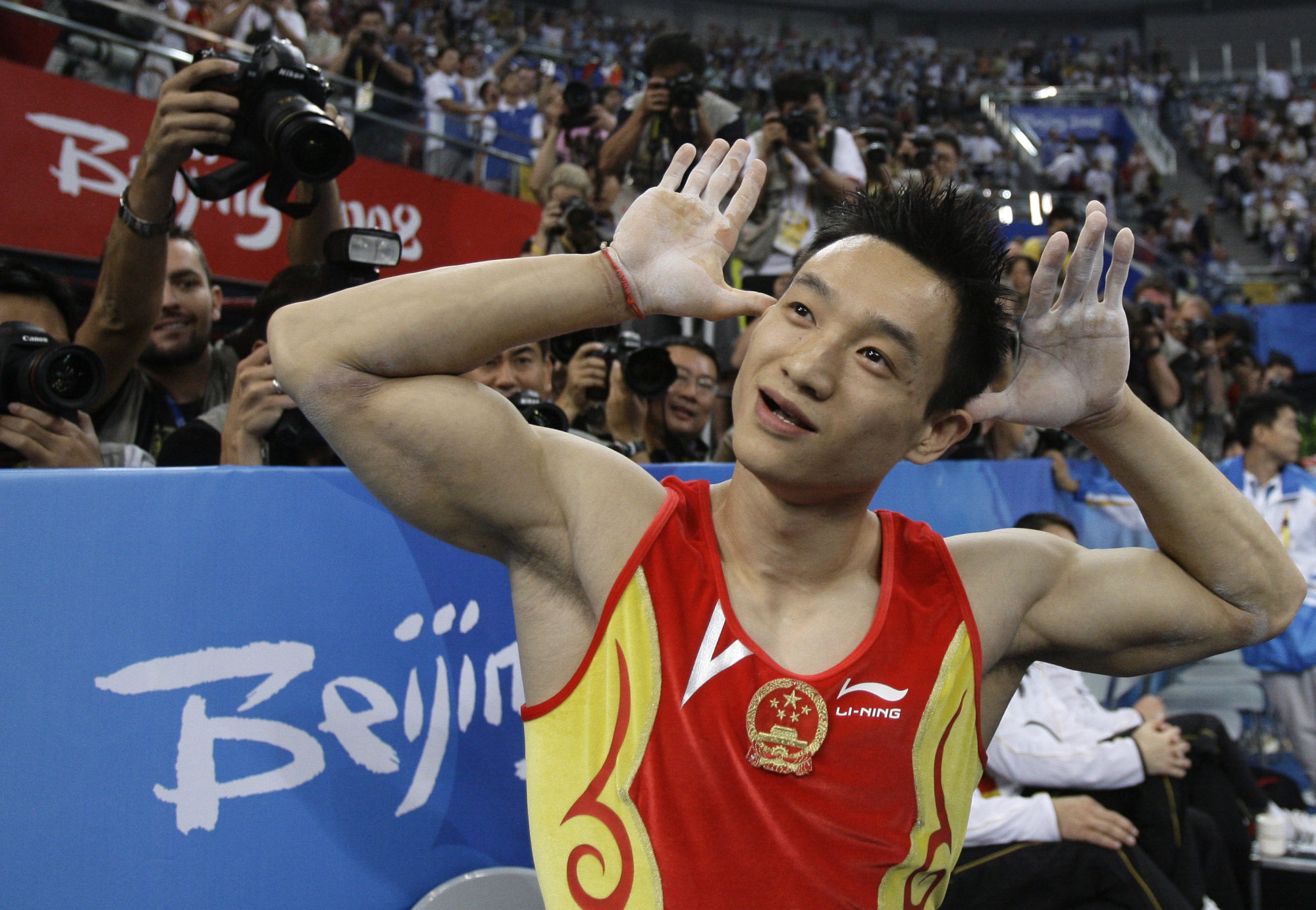
He is a two-time Olympic Champion on the Parallel Bars.
Prior to his achievement, only two gymnasts had attained this record:
– Kato Sawao (JPN): 1972 and 1976
– Li Xiaopeng (CHN): 2000 and 2008 (+ bronze medal in 2004)
Thanks to the gold medal he earned in Jakarta, he now possesses the record for the highest number of medals attained at the World Championships, with a total of four: 2017, 2018, 2022, and 2025.

More:
Zou Jingyuan’s FIG Profile
All Competition Recaps




Leave a Reply