
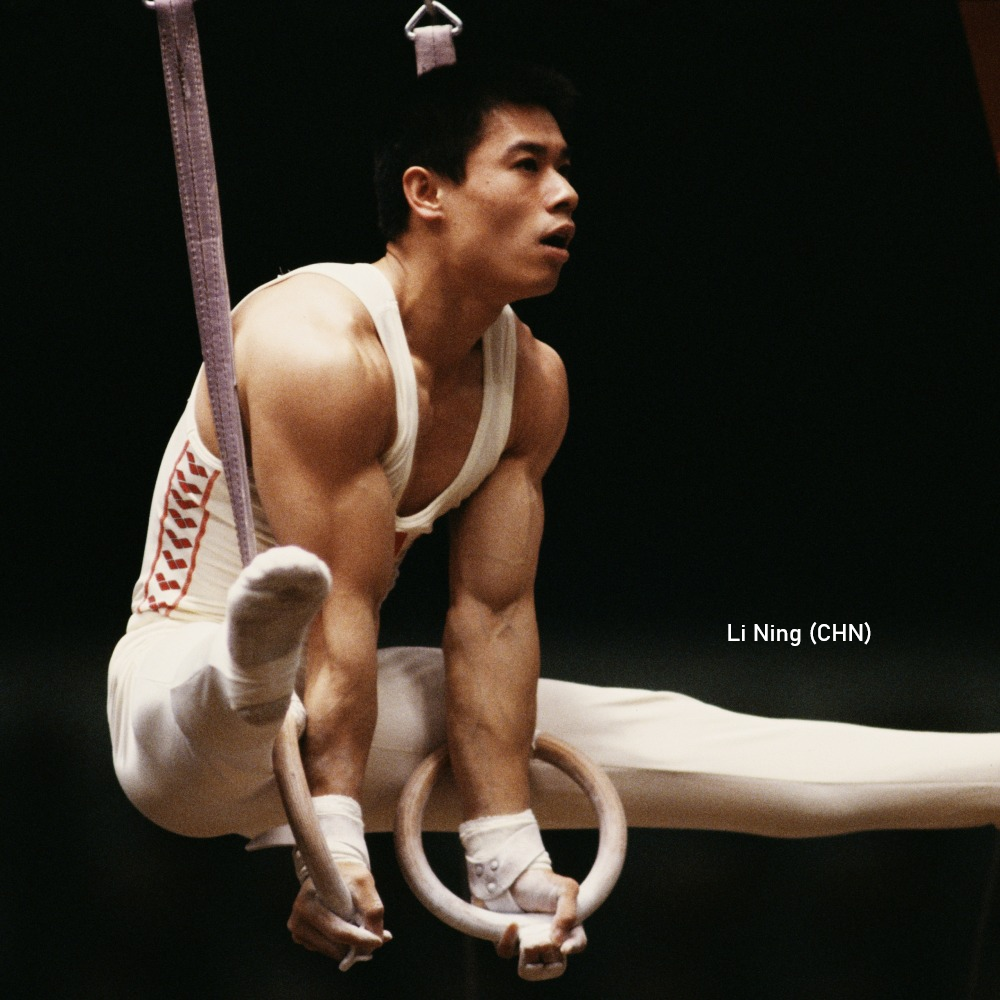
China’s 1984 Olympic Gymnastics Debut: A Historic Breakthrough
A Nation Returns to the World Stage
The 1984 Los Angeles Olympics marked a pivotal moment in Chinese sports history. After a 32-year absence from the Summer Games, the People’s Republic of China arrived with a clear mission: to “break out of Asia and advance on the world.” This wasn’t merely about athletic competition: it was a statement of national resurgence following the normalization of relations with the United States and China’s re-entry into the International Olympic Committee in 1979.
The Mao-era slogan “Friendship First, Competition Second” was replaced by an aggressive drive toward sporting excellence. China had invested heavily in a nationwide system of elite sports academies, identifying promising young athletes and providing them with intensive training from an early age. Gymnastics, a sport where individual brilliance and team coordination could yield multiple medals, became a strategic priority.
The Soviet Boycott: An Unexpected Advantage
The Soviet-led boycott of the 1984 Games removed some of the world’s most dominant gymnastics powers from competition. The USSR, considered the top nation in both men’s and women’s gymnastics, was absent alongside East Germany, Bulgaria, Czechoslovakia, Hungary, and other Eastern Bloc countries.
This created a dramatically altered competitive landscape. Romania remained a force in women’s gymnastics, Japan continued to field elite male gymnasts, and the host nation United States brought a motivated squad. But with traditional powerhouses missing, opportunities opened for emerging nations.
China seized the moment. Their men’s team, already among the world’s best, found themselves in a three-way battle with Japan and the United States rather than facing the full might of Soviet dominance.
Li Ning: The Prince of Gymnasts
No athlete embodied China’s 1984 ambitions more than Li Ning. Before departing for Los Angeles, the 20-year-old gymnast declared with unusual confidence: “I am going to Los Angeles to pick up gold medals. I know what I am talking about, and I mean what I say.”
He delivered spectacularly. Li Ning won six medals in gymnastics alone, three gold (floor exercise, rings, and pommel horse), two silver (vault and teams All-Around), and one bronze (individual All-Around). This haul earned him the nickname “Prince of Gymnasts” in China and established him as one of the Games’ most decorated athletes.
His teammate Lou Yun captured gold in the vault and silver in floor exercise, while Tong Fei earned silver on horizontal bar. The Chinese men’s team finished second overall in the team final, trailing only the United States by a mere 0.6 points (591.4 vs. 590.8)
Women’s Gymnastics: Ma Yanhong Shines
On the women’s side, China faced stiffer competition from Romania’s dominant squad and the American team. Nevertheless, Ma Yanhong delivered a gold medal performance on the uneven bars, sharing the top spot with American Julianne McNamara in a tie.
The Chinese women’s team earned bronze in the team final, finishing behind Romania and the United States. While the women’s haul was smaller than the men’s, it established China as a legitimate contender in women’s artistic gymnastics for future Games.
1984 Medal Count: Artistic Gymnastics
Men’s Artistic Gymnastics
| Medal | Count | Notable Winners |
|---|---|---|
| Gold | 4 | Li Ning (3), Lou Yun (1) |
| Silver | 4 | Men’s Team, Lou Yun, Li Ning, Tong Fei |
| Bronze | 2 | Li Ning, Men’s Team (counted in silver) |
| Total | 10 |
Women’s Artistic Gymnastics
| Medal | Count | Notable Winners |
|---|---|---|
| Gold | 1 | Ma Yanhong (uneven bars) |
| Silver | 0 | — |
| Bronze | 1 | Women’s Team |
| Total | 2 |
Combined 1984 Artistic Gymnastics Total
| Category | Gold | Silver | Bronze | Total |
|---|---|---|---|---|
| Men | 4 | 4 | 2 | 10 |
| Women | 1 | 0 | 1 | 2 |
| Total | 5 | 4 | 3 | 12 |
China finished tied with the United States and Romania for the most gold medals in Artistic Gymnastics at the 1984 Olympic Games (5 each), though the U.S. led in total medals with 16.
China’s Artistic Gymnastics Medal History (1984–2024)
Since that breakthrough in Los Angeles, China has established itself as a perennial gymnastics power.
| Men’s Medals | Women’s Medals | Total | |
|---|---|---|---|
| All-Time Total | 53 | 25 | 78 |
Number of Olympic medals won by each country since 1948 in Men’s Artistic Gymnastics

Evolution of Olympic medals count per country since 1948 in Men’s Artistic Gymnastics (includes only nations with more than 8 medals in a single edition)

A Nation Transformed by Victory
Back home, Olympic fever gripped China. Four hours of television coverage aired daily, and when the women’s volleyball team defeated the United States for gold, factories and offices stopped work to watch. Fireworks erupted across the country, and jubilant crowds in Beijing cycled toward the U.S. embassy waving flags.
The athletes returned as national heroes. Under new incentive policies, each gold medalist received approximately $1,300 in consumer goods (television sets, tape recorders, and other luxuries equivalent to four years of average income).
But beyond material rewards, the 1984 Olympics accomplished something more significant. Pistol shooter Xu Haifeng, who won China’s first-ever Olympic gold medal, captured the sentiment: “I’ve come here representing a billion people, and they all had high expectations. China wants to wash away its image of being the weakling of Asia.”
The Foundation of a Dynasty
China’s 1984 Olympic gymnastics debut established the template for the country’s sports ambitions. The strategic investment in elite training academies, the focus on medal-rich sports like gymnastics and diving, and the national mobilization behind Olympic success all trace their roots to this watershed moment.
China finished fourth in the overall medal standings with 32 medals, including 15 gold, far exceeding expectations. In artistic gymnastics specifically, the performance announced China’s arrival as a global power, a status the country has maintained and strengthened across four decades of Olympic competition.
What began as a calculated return to international sport became the foundation of one of history’s most successful Olympic programs, and it started with a young gymnast from Guangxi province who said he was going to pick up gold medals, and meant exactly what he said.

More:
Artistic Gymnastics at the 1984 Summer Olympics
Men’s Gymnastics Olympic Medals Count since 1948
China’s 1984 Olympic Gymnastics Debut
China’s 1984 Olympic Gymnastics Debut China’s 1984 Olympic Gymnastics Debut China’s 1984 Olympic Gymnastics Debut China’s 1984 Olympic Gymnastics Debut


Leave a Reply