
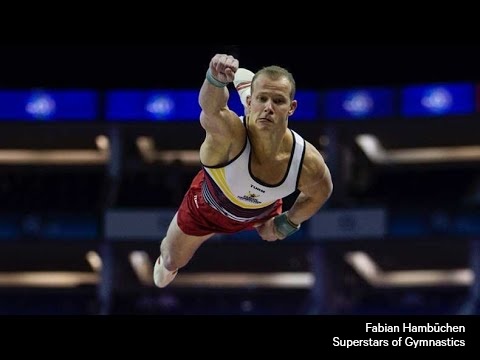
Gravity’s Grip in Gymnastics Performance (with Ian Gunther)
Ian Gunther’s Great Gravity Gamble: Equatorial Advantage?
American gymnast and influencer Ian Gunther is never short of interesting ideas: he contacted me a few days ago to launch an experiment about the impact of gravity on gymnastics performance based on the following preamble: check if the differences in Earth gravity between competitions locations have a measurable effect on gymnastics performance. Gravity is slightly weaker near the Equator by 0.3 – 0.5% compared to higher latitudes due to Earth’s shape and rotation.
So Ian raised a pertinent question:
“Can this minor modification influence performance in Men’s Artistic Gymnastics, and what methodology can we employ to evaluate the difference by contrasting scores from two comparable competitions, one held in higher latitudes and the other situated near the Equator?”🤓
Ian Gunther’ brief:

The idea was cool, but my inner Cartesian had some questions:
– can’t the differences get canceled out by the gym equipment (springboards, elasticity)?
– the change in gravity is super tiny, so are there more things that can affect a gymnast’s ability to defy gravity, whether they’re in Jakarta or Reykjavik?
– isn’t execution more about control and precision than how high a gymnast can go? (control over power and precision over height)
– given the subjective nature of gymnastics, do judges have the leeway to score with a margin exceeding 0.5% based on their observations?
Ian had already thought about these “objections,” but science is all about asking questions, coming up with ideas, gathering data, fueling curiosity, and building theories. So, I was totally in to take part in an experiment that would definitely shake up the world of gymnastics.
Our initial discussion:

The “Experiment”:
2025 Worlds vs. 2025 University Games
For a truly scientific experiment, two championships should be organized in the following conditions:
– the 1st one should be organized in the northernmost inhabited place: Alert, in Nunavut, Canada (they just need to throw together a gymnastics arena and provide some infrastructure, since only a maximum of 70 people live there. Or near a research center in Antarctica.
– for a wild contrast, the 2nd one should be very near the equator: Quito in Ecuador, Nairobi in Kenya, Libreville in Gabon or Singapore.
– both would feature the same gymnasts, routines, COP, judges, equipment, food, training, and sleeping arrangements.
So, 2025 turned out to be the perfect choice for this highly scientific experiment: the FISU Games (or University Games) happened in Essen, Germany, in August, and the World Championships took place in Jakarta, Indonesia, in October. Both events had qualifications, All-Around, and event finals featuring top gymnasts who had competed in big meets before. It wasn’t exactly ideal conditions like Alert, Canada, versus Quito, Ecuador, but I had a feeling that we wouldn’t see such competitions happening in the same year for a while.
Methodology: A Touch of Science
Once the meets were selected, I got some help from SportsDataAnalyst, who regularly collaborates with me in data collection. We looked at the execution scores and compare the results of the gymnasts. The difficulty and total scores were deliberately omitted, as the composition of the routines and the selection of elements are unaffected by gravitational factors.
In order to have a wider panel, I chose to use 2 methodologies:
Scientific Methodology #1
Based solely on E scores, I selected the finalists for the 6 apparatuses in each of the two competitions (FISU and WORLDS) and calculated 3 averages for each apparatus:
1. Average of the E scores of the 8 finalists in QX
2. Average of the E scores of the 8 finalists in Finals
3. Average of the E scores of the 8 finalists in QX + Finals
Scientific Methodology #2
I selected all the Execution scores achieved by all competing gymnasts on the 6 apparatuses in each of the two competitions (FISU and WORLDS):
1. Average of all the E scores in QX
2. Average of all the E scores in the All-Around
3. Average of the E scores in all Event Finals
Results: Jakarta 2025’s Leap Ahead
Scientific Methodology #1:
Comparison of Execution Scores
Event Finalists Only
2025 FISU and 2025 World Championships
In the tables below, the column labeled “delta” illustrates the disparity between the FISU and WORLD events: an orange cell signifies that the execution scores at the FISU Games were superior, while a green cell indicates the contrary. We first focused on the positive percentage, which would demonstrate that execution scores in Jakarta were higher, thereby substantiating that gravity exerted a beneficial influence on gymnastics performance.

The results vary depending on the apparatus. Scores vary from -2.7% on Floor (gymnasts did better in Essen) to +5% on Parallel Bars at Worlds. Ultimately, the event finalists’ Execution scores are on average 0.386% higher in Jakarta compared to Essen, which, rather oddly, corresponds to Jakarta’s gravitational advantage due to its proximity to the Equator. Alleluia! We broke the code😎: gravity has a direct effect on execution scores and it perfectly matches gravity’s lighter impact by the equator.

Next, I calculated the difference between all male gymnasts’ scores (QX, AA, Event Finals) achieved in Essen and in Jakarta. There were more competing athletes in Jakarta so I had to weigh the numbers in order to have a comparable calculation basis between the two competitions.
Scientific Methodology #2
Comparison of Execution Scores
All Gymnasts in QX, All-ARound and Event Finals
2025 FISU and 2025 World Championships

The results were different: The average Execution scores attained in both competitions were notably similar, if not identical (8.434 vs. 8.433). This raised questions regarding the initial findings of the experiment conducted with a smaller sample size.

According to these latest results, the equatorial advantage of gravity had no influence on gymnastics performance. Was it all for nothing?😱


Or could we conclude that the whole experiment shows that gravity by the Equator impacts mostly event specialists – for some reason? 🤔
Eventually, after a comprehensive analysis of the data, averages, and results, and by taking into account all the factors that may influence an execution score – such as the gymnast’s health, sleep, training conditions, equipment, humidity, and the inherent subjectivity associated with human scoring – we reached these final conclusions, which are eloquently presented by Ian in this video. The experiment was not particularly conclusive. 😐🫥
Gravity and the Future of Gymnastics Performance
The experiment indicated that execution scores in event finals were, on average, higher by 0.3% in Jakarta. The FIG might consider organizing World Cups (which include only event finals) both in proximity to the Equator and at considerable distances from it, to facilitate a thorough analysis and check if this is a long-term trend. I’m sure Greenland will soon host a series of gymnastics events in the coming months. The place has benefited from a sudden regain of attention recently…🇬🇱
Sadly, the analysis revealed that 2 out of the 3 events where defying gravity matters a lot, like Floor and High Bar, had lower execution scores in Jakarta compared to Essen. The event that seemed to take full advantage of being closer to the Equator was the Parallel Bars… or maybe it was just because two-time Olympic Champion Zou Jingyuan (CHN) showed up in Jakarta but not in Essen. Just throwing that out there… 🤔
Ultimately, the principal conclusion is that in artistic gymnastics, the force of gravity must be consistently defied, and athletes cannot depend on the Equator’s marginally beneficial conditions to achieve superior scores.

Disclaimer: While the data presented is accurate and derived from the official scores released by the FIG, the authors would like to emphasize the limitations inherent to the experiment. Duh.
More: Jakarta Gymnastics 2025 MAG Scores Review & Key Moments


Leave a Reply