
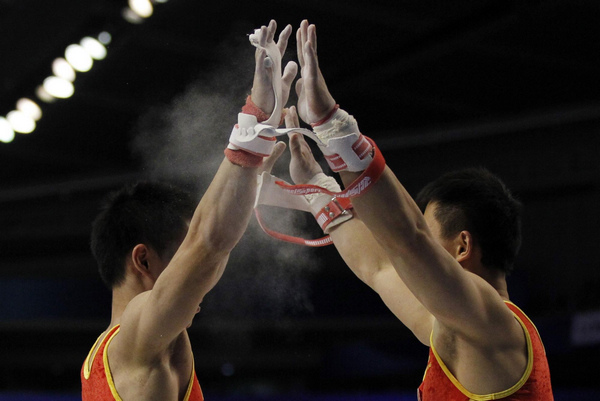
Analysis of the Chinese Men’s Artistic Gymnastics Training Methods
The sustained dominance of Chinese Men’s Artistic Gymnastics on the world stage is not accidental; it is the result of a highly structured, government-funded, and philosophically consistent training system. This system, which spans from early childhood to elite senior competition, is characterized by an intense focus on fundamental physical conditioning, technical precision, and a unique approach to athlete development and welfare.
This analysis delves into the multi-tiered structure of the Chinese Men’s Artistic Gymnastics training methods, including the sports school system, the core training philosophy, the specialized conditioning methods, and the logistical realities of an athlete’s life within this demanding environment.

May 10, 2021 – Source: CFP
The Multi-Tiered System of Athlete Development
The Chinese Men’s Artistic Gymnastics program operates on a clear, hierarchical structure designed to funnel the most talented athletes to the national level. This system ensures a consistent pipeline of talent and standardized training principles across the country.

The Core Training Philosophy: Building Blocks and Technical Precision
▶ Recruitment and Entry
Children typically enter the system in one of two ways: either their parents enroll them in a local city sports school to improve physical health or manage excess energy, or they are scouted directly from elementary schools by provincial and city coaches. The initial phase is designed to be enticing, focusing on the fun and joy of playing with gymnastics.
The foundational philosophy of Chinese Men’s Artistic Gymnastics training is an unwavering emphasis on the basic building blocks of the sport, which are pushed heavily between the ages of 5 and 16
▶ Training methods & Foundational Conditioning (Ages 5-16)
Flexibility and strength are paramount, laying the physical foundation for the athlete’s future. The training load is grueling, and athletes who cannot handle the intensity are steadily phased out or return to recreational gymnastics. Key conditioning elements heavily ingrained during this period include but not limited to:
In addition to conditioning, the early years focus on compulsory skills done beautifully, with every child learning basic routines throughout the years to ensure technical mastery.
▶ Apparatus Specialization and Progression
Around the ages of 14-15, athletes transition into proper World Gymnastics competitions, developing their own skills and routines. Early routines are generally similar, reflecting the shared fundamental skills and techniques:

As gymnasts progress into their senior careers, they often find their own strengths and may choose to specialize on specific apparatuses based on their body type or technical affinity. While the fundamental training methods, conditioning and philosophy are largely the same across provinces, each province develops its own slight variations in technique and coaching as athletes grow into adolescence and senior careers.
▶ The Rings Strength Protocol
A notable aspect of the Chinese system is the specialized approach to Rings strength. This high-intensity conditioning is not started until ages 14-15, when the body is deemed mature and strong enough to handle the massive strain on joints and tendons.
The Chinese employ an ingenious system utilizing the rings straps and the ring itself to shorten the lever, leading to a high-intensity, high-growth method for developing rings strength. For senior athletes, Rings strength is the main conditioning focus apart from basic conditioning, with the majority of their time spent strengthening their bodies to boost their Rings difficulty and improve overall stamina.
The Logistics of Sports School Life in Chinese Men’s Artistic Gymnastics
For athletes in the Provincial and National Teams, the sports school is a full-time living and training environment, a system that has been facing challenges due to China’s economic development.
▶ The Shrinking Sports School System
There is a shrinking number of sports schools in China due to improvements in the economy and living conditions over the past 30 years. Many parents are now unwilling to send their children to what is perceived as a “hard life,” despite Chinese students regularly studying 10+ hours per day. This reduction is particularly noticeable in less affluent provinces.
▶ Athlete Life and Welfare
▶ Competition and Financial Structure
Unlike the Western model, competitions in China are only held 2-3 times per year at the national or provincial level. These events are often week-long due to the international format.
Financials: Athletes are only given a salary if they score a top 3 finish in any national competition final. Their salary is directly correlated to their athletic success, creating a high-stakes, performance-driven financial incentive.
▶ Injury Prevention and Treatment
Recognizing the high physical stress placed on athletes, the system incorporates robust medical support:

Conclusion
The Chinese Men’s Artistic Gymnastics training methods are a highly effective, comprehensive, and demanding model built on a foundation of early physical conditioning and technical mastery. The hierarchical structure ensures that only the most resilient and talented athletes reach the National Team, often through a combination of scouting, competition success, and provincial investment.
While the system faces challenges from a changing socio-economic landscape, its philosophical commitment to fundamental strength, training methods, specialized apparatus conditioning (like the unique Rings protocol), and integrated athlete welfare provides a powerful framework for producing world-class gymnasts. The direct correlation between athletic success and financial reward further reinforces the high-performance culture that defines Chinese Men’s Artistic Gymnastics today.
Chinese Men’s Artistic Gymnastics training methods and Chinese Men’s Artistic Gymnastics training methods Chinese Men’s Artistic Gymnastics training methods and Chinese Men’s Artistic Gymnastics training methods
More:
Understanding China’s Gymnastics Powerhouse
Zhang Boheng: Triumph Over Silver, All-Around Gymnastics Star



Leave a Reply