

The Men’s Artistic Gymnastics Routines that Shaped and Perfected the Sport
Men’s artistic gymnastics is often reduced to highlight reels and medal counts, but the sport is better understood through the routines that shaped it. Each apparatus – floor exercise, pommel horse, still rings, vault, parallel bars, and high bar – has evolved through moments when a routine – and a gymnast – redefined what was possible, and later, when another clarified what judges more precisely require.
For anyone looking to understand men’s artistic gymnastics routines beyond scores, these routines tell the story of the sport.
Here are six men’s artistic gymnastics routines that define each apparatus, pairing a historically influential performance with a modern routine that reflects today’s execution standards. Together, they explain how difficulty, execution, and composition interact under the MAG Code of Points, and why some iconic routines matter for their impact, while others matter for their precision.

Floor Exercise
The Routine That Changed Floor:
Kenzo Shirai (JPN)
2013 World Championships – Event Final
Score: 7.4 + 8.600 = 16.000
> WHAT TO WATCH FOR :

– How often the gymnast twists and lands facing forward: that’s Kenzo’s legacy
– Power, speed & control marrying artistry
Kenzo Shirai’s 2013 World Championships floor routine was the moment floor exercise pivoted decisively toward twisting supremacy. This was not (yet) the era of universal quads, but Kenzo made clear where the event was heading. His routine prioritized rotational speed, forward-facing landings, and technical precision in twisting mechanics rather than sprawling acrobatics.
He flipped the axis forward. Quadruple twists and aggressive connections turned floor into a rotational arms race. What made his impact lasting wasn’t just the skills themselves, but their repeatability. He normalized elements that were previously considered one-off stunts, and the MAG Code of Points included a few of his eponymous skills.
What separated this routine from previous iterations was its sense of discovery: difficulty was being re-invented, not yet normalized. Judges rewarded the risk, and the MAG Code of Points soon followed, reshaping both training, difficulty score and judging expectations. As a result, modern floor routines are now more constructed around twist density and acrobatic variety.
ALTERNATES
Alexei Nemov (RUS) – 2000 Olympic Games – AA
Kohei Uchimura (JPN) – 2014 World Championships – AA
Men’s Artistic Gymnastics Routines
The Routine That Perfected it:
Carlos Yulo (PHI)
2019 World Championships – Event Final
Score: 6.5+ 8.800 = 15.300
> WHAT TO WATCH FOR :

– Chest position on landings: almost nothing is given away
– Body tension in the air, everything stays compact and readable
– Precision as a competitive strategy
Carlos Yulo has many excellent routines in his “repertoire”’ but his 2019 gold medal routine is a study in modern floor efficiency. Rather than chasing novelty, he has refined every phase of execution since 2017: compact twisting shapes, controlled rebounds, and landings engineered to minimize deductions. This routine sits comfortably at the top of the difficulty range, yet never feels overloaded.
His routine hit the modern difficulty threshold without looking frantic, proving that execution can still separate athletes in a power-heavy era. Crucially, Carlos didn’t simplify composition; he refined it. He demonstrated precision as a competitive strategy.
What makes it exemplary is how little it negotiates with error: no desperation steps, no exaggerated presentation to disguise control issues, i.e. everything that the MAG Code of Points required on floor. In an era where floor difficulty has plateaued, Carlos demonstrated that the execution score remains the final separator. His Olympic gold medal three years later serves as compelling evidence.
Funny enough, Carlos and Kenzo ended up sharing the podium at the 2018 World Championships, bringing together two different eras.
ALTERNATES
Artem Dolgopyat (ISR) – 2020 Olympic Games – EF
Nikita Nagornyy (RUS) – 2021 European Championships – EF
Men’s Artistic Gymnastics Routines
Pommel Horse
The Routine That Changed Pommel Horse:
Krisztián Berki (HUN)
2012 Olympic Games – Event Final
Score: 6.9 + 9.166 = 16.066
> WHAT TO WATCH FOR :

– Uninterrupted rhythm, no visible pauses, no improvisation
– Control and endurance
Krisztián Berki’s London 2012 routine distilled pommel horse into its purest modern form. Where earlier eras valued stylistic variety, Berki imposed absolute clarity: identical circles, consistent tempo, and minimal deviation from axis. His approach reinforced a judging preference for precision over flair, accelerating the sport’s shift toward homogeneity.
What matters here isn’t (only) the difficulty score, but the logic the routine introduced. Krisztián Berki and Louis Smith (GBR) achieved a tie, and the resolution for the gold medal was determined by the execution score. This doesn’t imply that Louis’ routine was any less impressive, but Krisztián’s influence and legacy are visible in the apparatus’s current intolerance for imbalance and improvisation.
Pommel horse became less expressive, but far more exacting. Today’s routines – regardless of skill selection – are judged through the lens Krisztián helped solidify with his performance.
ALTERNATES
Max Whitlock, OBE (GBR) – 2016 Olympic Games – EF
Marius Urzică (ROU) – 2000 Olympic Games – EF
Men’s Artistic Gymnastics Routines
The Routine That Perfected it:
Rhys McClenaghan, MBE (IRL)
2022 World Championships – Event Final
Men’s Artistic Gymnastics Routines
Score: 6.4 + 8.900 = 15.300
> WHAT TO WATCH FOR :

– Head and shoulder alignment, remarkable stability throughout
– His execution balances difficulty with security
Rhys McClenaghan’s 2022 world-title routine represents pommel horse at its most technically complete. Every circle is centered, every travel arrives on time, and transitions appear pre-programmed. Unlike many routines with a high difficulty score, nothing looks borrowed or forced.
His execution is not just clean, it is systematic. Pointed toes. What sets this routine apart is how it balances difficulty with security, proving that elite pommel horse can be both ambitious and repeatable. Rhys didn’t redefine the apparatus: he demonstrated its optimal operating state.
ALTERNATE
Lee Chih-kai (TPE) – 2020 Olympic Games – EF
Men’s Artistic Gymnastics Routines
Still Rings
The Routine That Changed Still Rings:
Jury Chechi (ITA)
1996 Olympic Games – Event Final
Score: 9.887
> WHAT TO WATCH FOR :

– Total absence of shaking during strength holds
– Time stood still
Jury Chechi transformed rings into a demonstration of static dominance. Prior to his era, swing elements played a larger role in composition. Chechi centered the event around strength holds, insisting on absolute stillness and perfect angles. His routines established the aesthetic that still defines rings today: minimal motion, maximal control. The MAG Code of Points followed his lead, rewarding clarity of holds and punishing instability.
Jury didn’t just win medals, he dictated what judges would value for decades. Modern rings specialists are still measured against the standard he set.
ALTERNATES
Chen Yibing (CHN) – 2008 Olympic Games – EF
Men’s Artistic Gymnastics Routines
The Routine That Perfected it:
Liu Yang (CHN)
2020 Olympic Games Event Final
Score: 6.5 + 9.000 = 15.500
> WHAT TO WATCH FOR :

– How quickly each hold locks in, no adjustment phase
– His iconic neck rolls that charmed a new generation
– Quiet dominance
Liu Yang’s Olympic routine in Tokyo represents rings at its most refined. The difficulty score is elite, but nothing looks forced. Holds settle instantly, transitions are seamless, and the dismount arrives without visible fatigue.
What separates Liu Yang from many strength specialists is how little he negotiates with gravity: positions are assumed, not fought for. His performance illustrates the modern ideal: strength without struggle.
In a discipline where overexertion is common, Liu Yang’s calm control stands out as the clearest model of execution-first rings gymnastics, much like his primary competitor over the past decade, Eleftherios Petrounias (GRE), from whom I could have drawn upon the 2016 Olympic gold routine to conduct a comparable demonstration.
Like Jury Chechi, his neck rolls contributed to the strengthening of his legendary status (although his were initially motivated by a cramp…)
ALTERNATE
Elefthérios Petroúnias (GRE) – 2016 Olympic Games – EF
Men’s Artistic Gymnastics Routines
Vault
The Routine That Changed Vault:
Marian Drăgulescu (ROU)
2004 Olympic Games Event Final
Score:
Vault 1: SV: 10 => Score: 9.900
> WHAT TO WATCH FOR :

– The power, height, distance and block rivaled multiple twists complexity
– The skill that elite vault specialists must diligently master
The dawn of the new millennium saw a sea change in the world of vaulting. The ubiquitous Yurchenko, born in the 1980s, once a daring innovation, was becoming more common, its difficulty increasingly measured by the complexity of its back-end acrobatics. The round-off entry, the backward saltos, the twists, these were the hallmarks of the era. Forward saltos, however, were still viewed with a wary eye, their landings often met with harsh penalties.
Then came Marian Drăgulescu. In 2000, his name was etched into the history books, forever linked to a vault (originally on the former horse) that would redefine the possibilities:
– subtle revolution: the Dragulescu, at its heart, was deceptively simple: a handspring forward entry, culminating in a double salto forward in the tucked position (Roche), followed by a half twist – which made all the difference.
– deceptive difficulty: the twisting element, seemingly minimal, was in reality the key. It was this subtle shift that added a layer of complexity, a new challenge to the landing, making the vault a true test of skill and control.
– catalyst for change: it influenced apparatus design; the demand for harder vaults on a stable surface contributed to the FIG replacing the old horse with the safer, flatter vaulting table in 2001, allowing for greater innovation.
The echoes of the 2004 Olympics still reverberate with the artistry of Marian Drăgulescu. He didn’t just compete, he redefined the very language of vaulting. His Dragulescu was a skill so audacious it seemed to defy gravity.
– the impossible’s ascent: this vault, a move so groundbreaking it initially belonged solely to its namesake, became the gold standard, the Everest of the men’s vault. He pushed the boundaries, charting the unknown.
– a ripple effect of ambition: the audacity of his feat ignited a spark in his rivals. Gymnasts, emboldened by his example, began to craft their own breathtaking feats.
– the art of the landing: the grace with which he stuck it made the impossible look effortless. It was a testament to the potential for control, a dance of precision amidst the whirlwind of rotations, showcasing the mastery of the moment.
His Dragulescu in Athens wasn’t just a vault: it was a statement, a testament to the power of precision, a bold declaration that the future of vaulting lay not just in height and rotation, but also in the delicate balance between risk and artistry. Regrettably, Marian fell while executing his second vault, resulting in the loss of valuable tenths, ultimately securing him a place in the bronze position.
ALTERNATE
Ri Se-gwang (PRK) – 2014 World Championships – EF
Yang Hak-seon (KOR) – 2011 World Championships – EF
Men’s Artistic Gymnastics Routines
The Routine That Perfected it:
Jake Jarman (GBR)
2023 World Championships – All-Around
Score: 6.0 + 9.433 = 15.433
> WHAT TO WATCH FOR :

– Combo of the body lines + the stuck landing
– Jake’s face when he realized what he had just done
Jake Jarman secured the gold medal on the vault at the 2023 World Championships; however, it is his performance during the All-Around competition that has attained legendary status and become iconic. Successfully executing the vault with the highest start value is a remarkable achievement, but the entirety of the first flight phase, the support, and the second flight phase collectively demonstrated the qualities necessary for such a vault to receive a perfect score 10, if it still existed.
Jake’s Yonekura was a high-difficulty vault, characterized by precision, amplitude, and composure. Throughout both the All-Around and the event final, his capacity to evaluate risk while maintaining control significantly enhanced the reliability of his execution and corresponding scores. His technique off the table was efficient, his flight phases readable, and his landings managed under pressure.
In a competition where innovation was present, Jake won by precision. The routine reinforced a central truth of today’s vaults: medals go to gymnasts who can deliver difficulty twice, cleanly.
ALTERNATE
Kohei Uchimura – Japan Cup 2010 – AA
Artur Davtyan (ARM) – 2022 World Championships – EF
Men’s Artistic Gymnastics Routines
Parallel Bars
The Routine That Changed Parallel Bars:
Rustam Sharipov (UKR)
1996 Olympic Games – Event Final
Score: 9.837
> WHAT TO WATCH FOR :

– How deliberately each handstand is presented
– Parallel Bars turned into a line & swing laboratory
Rustam Sharipov’s Atlanta routine belongs to the moment parallel bars transitioned into a handstand-driven apparatus. His emphasis on vertical positions, long lines, and controlled tempo reoriented both judging and composition. Swing was no longer enough, precision became mandatory.
This routine helped establish the aesthetic that still governs parallel bars today, where deviation from vertical is punished instantly. Sharipov didn’t overwhelm with difficulty: he clarified what excellence should look like and elevated PB difficulty with elite handstand control. Li Xiaopeng (CHN) was also another prime example.
ALTERNATE
Li Xiaopeng (CHN) – 2000 Olympic Games – EF
Oleg Verniaiev (UKR) – 2014 World Championships – EF
Men’s Artistic Gymnastics Routines
The Routine That Perfected it:
Zou Jingyuan (CHN)
2018 World Championships – Event Final
Score: 7.0 + 9.433 = 16.433
> WHAT TO WATCH FOR :

– Vertical lines: shoulders, hips, feet all stacked
– Shoulder angle in handstands: immovable
– The cleanest Parallel Bars worker ever set the bar(s) at the the highest level
Zou Jingyuan’s 2018 routine is parallel bars stripped to its essence. The difficulty score is very high, yet entirely absorbed into execution. What truly separates him is how invisible the difficulty looks. Handstands hit vertical without hesitation, swings never break line, and transitions are timed with surgical precision. Interestingly, since 1996, only Ukrainian and Chinese gymnasts have won gold on Parallel Bars at the Olympics.
Zou Jingyuan didn’t reinvent parallel bars, he purified it.
What makes this routine definitive is not innovation, but inevitability: there is no visible struggle. Zou Jingyuan turned execution into an offensive weapon, forcing judges toward near-perfect scores. Today, parallel bars is the apparatus where execution matters most and is now judged against Zou Jingyuan’s standard: judges now (subconsciously?) expect near-zero execution errors.
ALTERNATE
NA
Men’s Artistic Gymnastics Routines and Men’s Artistic Gymnastics Routines MAG Code of Points Mag Code of Points MAG Code of Points MAG Code of Points MAG Code of Points MAG Code of Points MAG Code of Points
High Bar
The Routine That Changed High Bar:
Epke Zonderland (NED)
2012 Olympic Games – Event Final
Score: 7.9 + 8.633 = 16.533
> WHAT TO WATCH FOR :

– Release-to-release connections without pause
– Connection speed between releases: no reset
– His high bar became aerial chess
Epke Zonderland’s 2012 Olympic routine rewrote the rules of risk. By connecting multiple release moves in succession, he transformed high bar from a controlled swing event into an aerial gamble. What made the routine historic wasn’t just the skills, but the decision to connect them under Olympic pressure.
High bar composition changed. Release density became a necessity, not a gamble. Even if the MAG Code of Points has changed since 2012 (his execution score would be much lower today), modern routines still echo Epke’s logic: reward comes from bravery chained together and risk tolerance on this apparatus skyrocketed.
His routine was listed in the Top 10 London Olympics performances by CNN and called the “Comaneci” moment of the Games. Epke was dubbed “The Flying Dutchman” and won Netherlands’ first gold medal in gymnastics for 84 years.
ALTERNATES
Igor Cassina (ITA) – 2004 Olympic Games – EF
Alexei Nemov (RUS) – 2004 Olympic Games – EF*
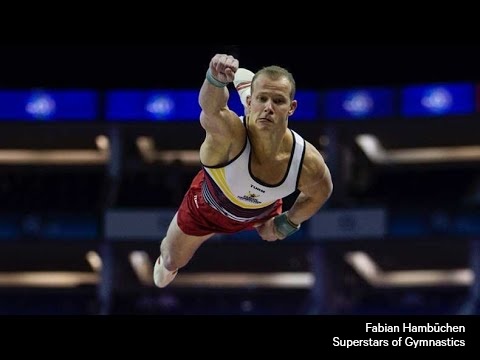
Fabian Hambüchen (GER) – 2004, 2008, 2012 and 2016 Olympic Games – EF
* Alexei Nemov’s controversial routine in Athens had a significant impact on the modernization of the scoring system and on the evolution of the Code of Points.
Men’s Artistic Gymnastics Routines
The Routine That Perfected it:
Kohei Uchimura (JPN)
2016 Olympic Games – All-Around
Score: 7.1+8700 = 15.800
> WHAT TO WATCH FOR :

– Body line out of this world: straight, fast, efficient, uninterrupted swing rhythm
– Everything breathes, topnotch execution: King Kohei
– High bar isn’t just chaos, it’s composition
So many of Kohei’s routines helped shape Men’s Artistic Gymnastics, and he could have been included for floor based on his routine performed at the 2014 Worlds Championships or for vault (2010 Japan Cup), both exemplifying his precise and regular high level of execution.
This high bar routine reaffirmed that execution still governs excellence. His difficulty was competitive, reflected the requirements of the 2013-2016 MAG Code of Points, but never chaotic. Swing rhythm, tap timing, and body line flowed seamlessly into a controlled dismount. In contrast to the risk-heavy trend, Kohei reminded the sport that high bar is still judged as a routine, not a stunt sequence, all the while including a Kovacs, a piked Kovacs and a Cassina (rated G).
His routine is the clearest example of how to integrate difficulty into a readable, judge-friendly structure.
Daiki Hashimoto (JPN) and Tang Chia-hung (TPE) undoubtedly inherited this standard of rigor, and pushed the diversity of their routines further, motivated by the changes in the latest MAG Code of Points
It’s the clearest demonstration of how execution can still define excellence.
ALTERNATES
Hashimoto Daiki – 2023 World Championships – EF
Tang Chia-hung (TPE) – 2025 Asian Championships – EF
Men’s Artistic Gymnastics Routines
More Than Routines, a Moving Language
Men’s Artistic Gymnastics does not progress linearly, it mutates. An athlete introduces a new solution, the MAG Code of Points absorbs it, and the entire field reorganizes around that idea. What was once revolutionary becomes required; what was once enough becomes obsolete.
It is a continuous negotiation between bodies, ideas, and a rule book that is always chasing what athletes have already invented.
Some Men’s Artistic Gymnastics routines broke ceilings by expanding what was physically imaginable. Others refined chaos into precision, proving that mastery is not about excess, but control. Together, they show that gymnastics does not evolve linearly. It lurches forward when an athlete finds a loophole, a new rhythm, or a cleaner logic, and dares the MAG Code of Points to keep up.
The Men’s Artistic Gymnastics routines listed here expose that tension. Some did not simply win medals: they forced the sport to reorganize itself. Others did not break the MAG Code of Points: they revealed how to master it. Innovation without control reshaped apparatuses; control without innovation perfected them. Modern gymnastics exists precisely in that overlap.
What ultimately defines greatness here is not difficulty alone, nor cleanliness, nor even originality. It is the ability to change what is considered normal, whether by making the impossible routine standard, or by making complexity look inevitable.
If the MAG Code of Points is the grammar of the sport, these routines are its literature: moments when execution, difficulty, and intent briefly align, leaving behind a new standard that future gymnasts are compelled to chase, copy, or resist.
If you want to understand Men’s Artistic Gymnastics, don’t just watch who wins. Watch who moves the goalposts, and who learns to live perfectly inside their new position. Everything else is just a score sheet.
Men’s artistic gymnastics does not evolve by consensus, but by rupture, one routine at a time, until the sport swallows, digests and regurgitates its own past.
More:
MAG Code of Points 2025-2028: Review & Analysis
Selecting only two routines per event proved to be a challenging task; therefore, I concentrated on the last 30 years (which did not simplify matters): numerous gymnasts have significantly influenced the sport through their entire careers or during Olympic cycles, rather than through a singular routine. Nevertheless, competitions are replete with iconic performances that linger in the memories of spectators and have played a crucial role in shaping Men’s Artistic Gymnastics (MAG). At times, this influence manifests as a substantial leap forward; at other times, it emerges as a gradual progression.


Leave a Reply to SportsDataAnalystCancel reply